


Student Success Starts With Active Learning

A first-year student can sit through an entire week of classes, nod along, submit the assignment, and still leave without a clear sense of how to make good decisions under pressure. That gap matters. Student success is not just about staying enrolled or passing exams. It is about helping students build the judgment, confidence, and communication skills they need to handle college well and carry that momentum into work and life.
For educators and academic leaders, that raises a practical question. What actually improves outcomes for students who are still learning how to manage time, navigate relationships, contribute in teams, and respond to ethical or emotional challenges? Content matters, of course. But format matters just as much. When students only receive information, they may remember terms. When they actively practice decisions, they are more likely to remember the lesson when it counts.
Why student success needs more than information
Most institutions already know the major barriers facing students. First-year learners often struggle with belonging, motivation, self-management, communication, and help-seeking. These are not side issues. They shape attendance, participation, persistence, and academic confidence.
The challenge is that many of these barriers do not respond well to lecture alone. You can explain empathy, professionalism, or ethical reasoning clearly and still find that students freeze when they face a messy real-world situation. That is because student success skills are behavioral. They are strengthened through use, feedback, and reflection.
This is where many well-intentioned programs hit friction. Institutions invest in orientation, advising, and support resources, yet classroom experiences may still reward passive note-taking more than active judgment. Students hear what to do, but they do not always get enough structured chances to try it, test it, and talk through the results with others.
The classroom is where student success becomes real
Student success initiatives often live across multiple offices, but the classroom remains the place where habits are formed most consistently. It is where students show up every week, interact with peers, respond to expectations, and decide whether learning feels relevant.
That is why instructional design deserves a central role in any student success strategy. If faculty can turn abstract skills into visible, discussable actions, students begin to connect personal development with academic performance. They stop seeing communication, ethics, and emotional intelligence as extra topics and start seeing them as part of how success works.
This does not mean every class must become a workshop. It means students need learning experiences that ask them to interpret a situation, make a choice, and examine consequences. A short simulation, scenario-based discussion, or guided decision exercise can do more to sharpen judgment than another slide deck packed with definitions.
Active learning changes the quality of engagement
Engagement is often treated as a participation problem, but the deeper issue is relevance. Students participate more when they can see why a lesson matters and when they have a role in making meaning from it.
Active learning improves that dynamic because it moves students from observers to decision-makers. Instead of simply hearing about conflict in teams, they face a realistic scenario and must decide how to respond. Instead of memorizing principles of professionalism, they weigh choices, interpret tone, and consider how others may react. That shift increases attention because the material now asks something of them.
It also improves discussion quality. Instructors know the difference between a room that offers surface-level comments and a room where students are genuinely testing ideas. Shared scenarios make richer discussion possible because everyone is reacting to the same moment, but from different perspectives. Students are more willing to speak when they are analyzing a case or simulation than when they feel they are being asked to produce the one correct answer on the spot.
For first-year students especially, this matters. Many are still finding their voice in college classrooms. Structured interaction lowers the barrier to entry while raising the level of thinking.
What student success skills look like in practice
When institutions talk about student success, they often mean a blend of academic and interpersonal capacities. The strongest programs recognize that these are deeply connected.
A student who communicates clearly with a professor is more likely to get help early. A student who can regulate frustration is less likely to disengage after a setback. A student who can read social cues and contribute productively in a group is better prepared for collaborative assignments and internships. A student who can think through ethical trade-offs is better equipped for leadership opportunities on campus and beyond.
These skills are teachable, but they are not always easy to teach in a concrete way. That is why experiential formats are so effective. They make invisible processes visible. Students can see how a rushed message creates confusion, how a lack of empathy damages trust, or how a small ethical compromise grows into a larger problem.
That kind of learning sticks because it is felt, not just heard.
Why gamified learning supports student success
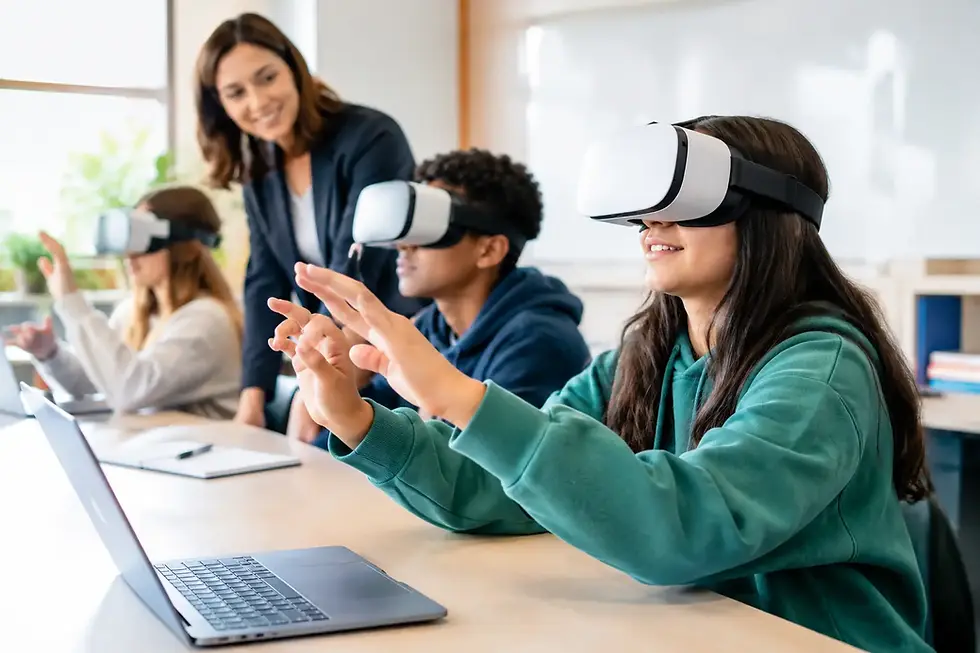
Gamified learning works best when it is not gimmicky. The goal is not entertainment for its own sake. The goal is purposeful engagement that helps students practice decision-making in a format that feels immediate and memorable.
In a well-designed simulation, students are placed in a realistic situation with enough complexity to feel authentic but enough structure to remain teachable. They make choices, see outcomes, and reflect on what happened. That process mirrors the kinds of judgment calls they will face in college, in internships, and in the workplace.
For educators, the value is practical. Gamified learning can increase participation without sacrificing rigor. It can make difficult topics easier to discuss because students are responding to a scenario rather than exposing personal experiences before they are ready. It can also create a stronger bridge between theory and application, which is often where student learning breaks down.
This is one reason simulation-based teaching has gained traction across higher education. Instructors want tools that do more than hold attention for a class period. They want experiences that deepen reflection, strengthen discussion, and produce evidence of learning students can use right away.
What educators should look for in a student success tool
Not every engagement strategy delivers meaningful results. Some activities are lively in the moment but disconnected from course goals. Others are easy to administer but too shallow to support real skill development.
A strong student success tool should align clearly with learning outcomes, fit naturally into a course or program, and give instructors enough structure to facilitate discussion with confidence. It should help students practice transferable skills, not just complete an isolated activity. And it should be realistic enough that students recognize themselves in the challenge.
Scalability matters too. Faculty and program leaders need classroom-ready resources that can work across sections, support varied teaching styles, and deliver a consistent experience without creating heavy prep demands. The best tools respect instructors' time while still raising the quality of learning.
That is where experiential platforms can offer a real advantage. Companies such as E.I. Games have shown that when simulations are thoughtfully designed, educators can bring emotional intelligence, ethics, communication, and leadership into the classroom in a way that feels concrete, engaging, and academically credible.
Student success is a design choice
There is no single intervention that guarantees better retention, stronger confidence, or deeper belonging. Student success depends on many factors, and context always matters. A commuter campus may face different challenges than a residential one. MBA students may need different examples than first-year undergraduates. Some instructors want a full-class activity, while others need a short module that fits into an already packed syllabus.
Still, one principle holds across settings. Students are more likely to grow when they are asked to do the kind of thinking success requires. They need learning experiences that are participatory, reflective, and grounded in real decisions.
That puts educators in a powerful position. Every course can become a place where students practice not only what to know, but how to act. Every discussion can move beyond recall and toward judgment. Every well-designed activity can help students connect classroom learning with the demands of college, career, and citizenship.
If we want students to become more capable, more confident, and more prepared for what comes next, we should give them more than information to absorb. We should give them meaningful chances to practice success before the stakes get higher.


Comments